
Karnataka Ingredient Archive
Every Ingredient Has a Story
Documented heritage, authentic sourcing, and the centuries of tradition behind every ingredient we use — traced back to its soil, its season, and its story.
Karnataka Ingredient Archive
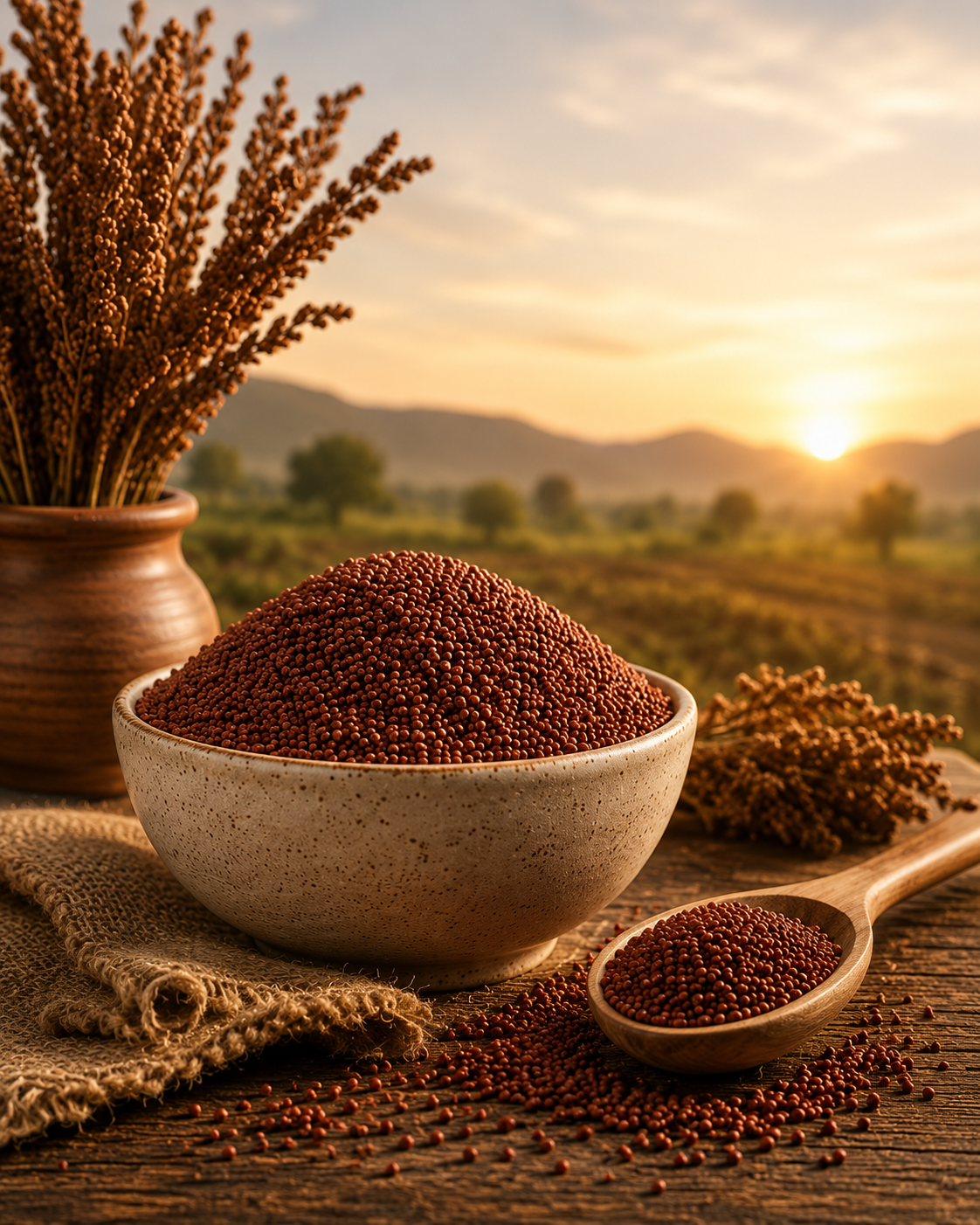
Ragi Karnataka's Ancient Grain
ರಾಗಿ — RaagiDocumented in Karnataka's agricultural history for over 4,000 years, ragi has nourished generations across the Deccan plateau — from farming communities to modern wellness kitchens.
- Hallur archaeological evidence — 1800 BCE Ragi cultivation traces discovered at the Hallur archaeological site in Karnataka.
- Karnataka produces over 58% of India's ragi The land, climate and traditional farming practices make Karnataka the heartland of ragi.
- Traditional nourishment across generations A wholesome grain that has been part of everyday meals for all age groups, for centuries.
Karnataka Ingredient Archive
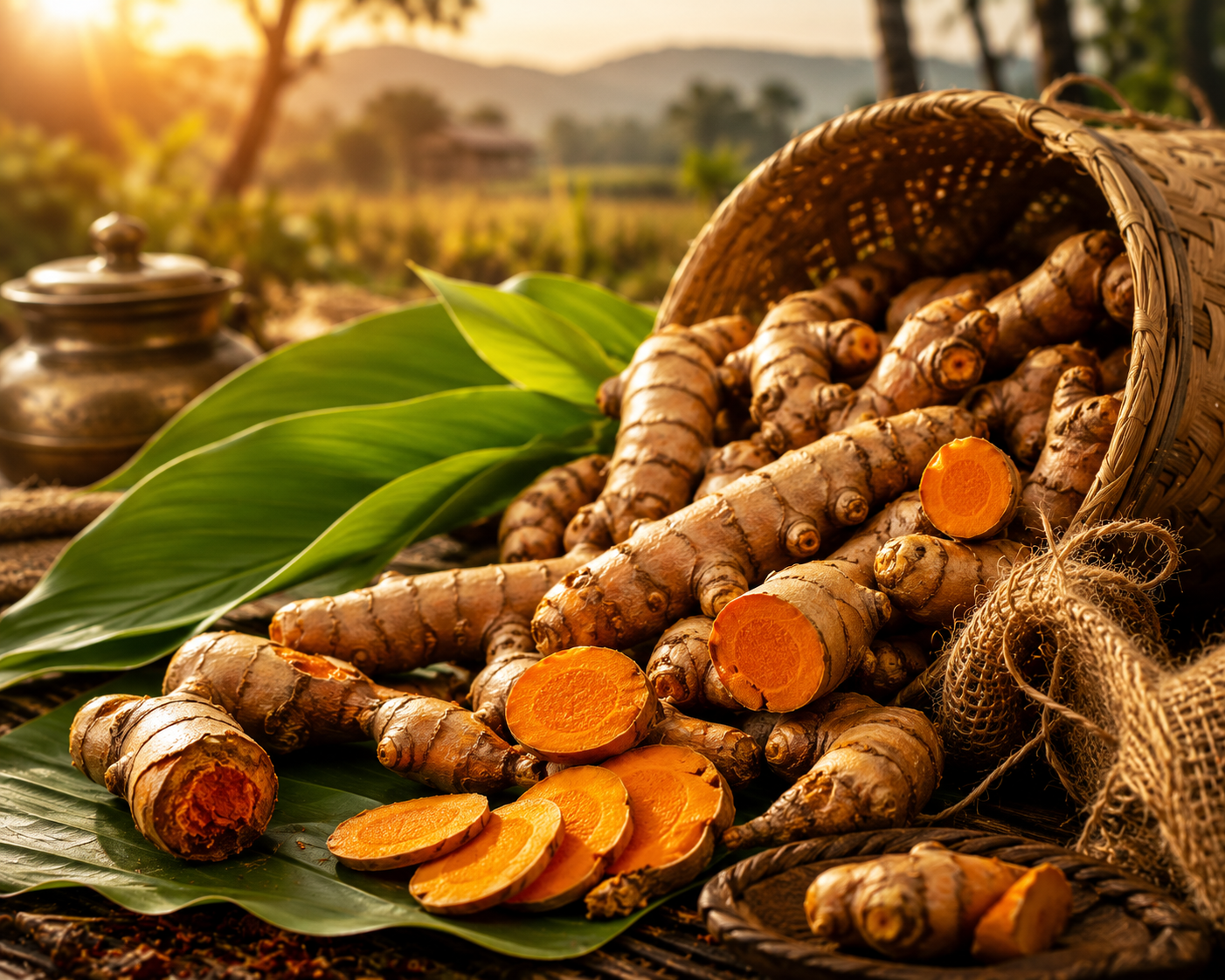
Turmeric India's Golden Spice
ಅರಿಶಿನ — ArishinaNative to South Asia and cultivated in India for 4,000+ years, turmeric is referenced in the Vedas and across Sanskrit texts as Haridra. Deeply woven into Indian rituals, weddings, and religious ceremonies, not just cooking. Karnataka is among India's leading turmeric-growing states.
- 4,000+ years of cultivation in India Referenced in Vedic texts and Ayurvedic literature as Haridra — a sacred and culinary root.
- Known as Arishina in Kannada Used in Karnataka weddings, rituals, and Haldi ceremonies as a symbol of purity and prosperity.
- A genuine Karnataka-grown spice Karnataka cultivates turmeric alongside Andhra Pradesh, Tamil Nadu, and Telangana.
Karnataka Ingredient Archive
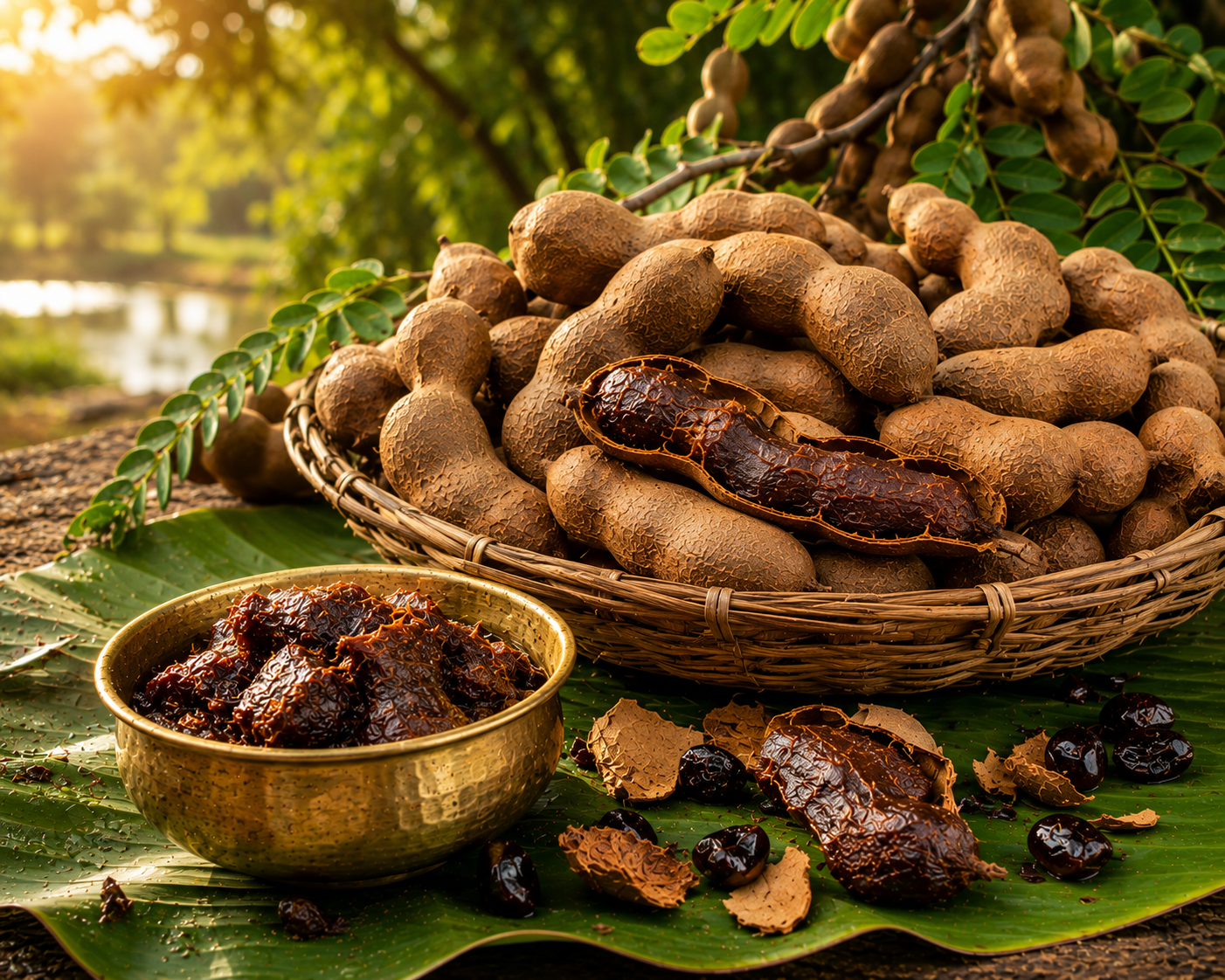
Tamarind The Soul of Puliyogare
ಹುಣಸೆ — HunaseNot native to India — originally from tropical Africa — but naturalised and embraced across Indian cooking for centuries. The dish name "Puliyogare" uses "puli," a pan-South-Indian word for tamarind widely used across Karnataka, making Hunase the defining ingredient of our flagship product.
- Kannada name: Hunase (ಹುಣಸೆ) Foundational souring agent across South Indian temple-kitchen cooking for centuries.
- The soul of Puliyogare Tamarind's tangy depth defines Karnataka's most iconic rice preparation.
- A naturalised Karnataka staple Though not native, centuries of cultivation have made Hunase synonymous with Karnataka's flavour identity.
Karnataka Ingredient Archive
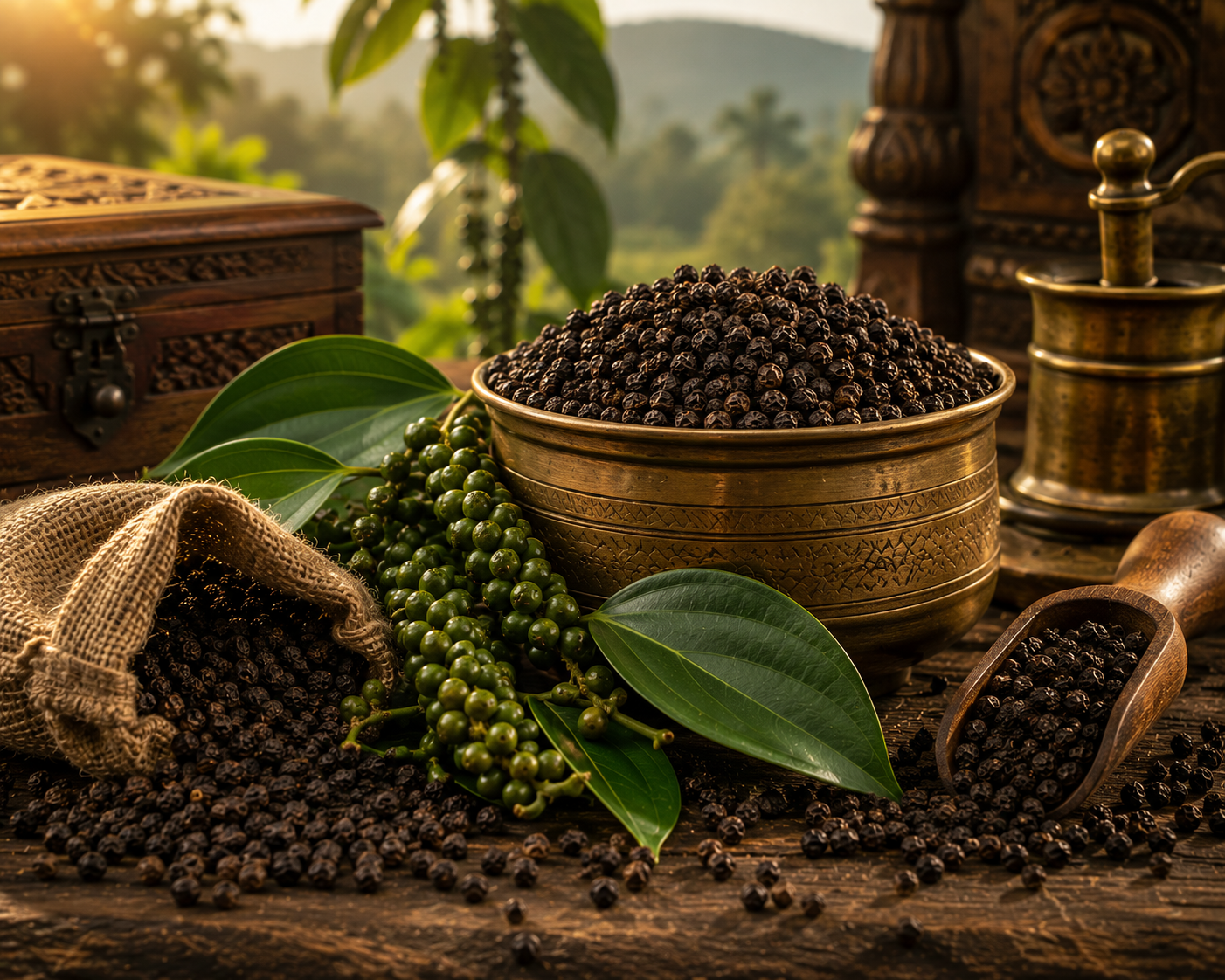
Black Pepper Kodagu's Climbing Vine
ಕಾಳುಮೆಣಸು — KaalumenasuCultivated in India for over 2,000 years, black pepper was historically a dominant force in the global spice trade. Kodagu (Coorg) and Chikkamagaluru are Karnataka's leading pepper-growing regions, traditionally grown as a climbing vine intercropped with coffee and areca nut.
- 2,000+ years of Indian cultivation India once supplied roughly 80% of world pepper demand before the 19th century.
- Grown in the heart of Kodagu Kodagu's high rainfall, forest cover, and misty conditions suit the pepper vine perfectly.
- Intercropped with coffee Traditional Karnataka farming wisdom — pepper vines climb coffee and areca trees in Kodagu estates.
Karnataka Ingredient Archive
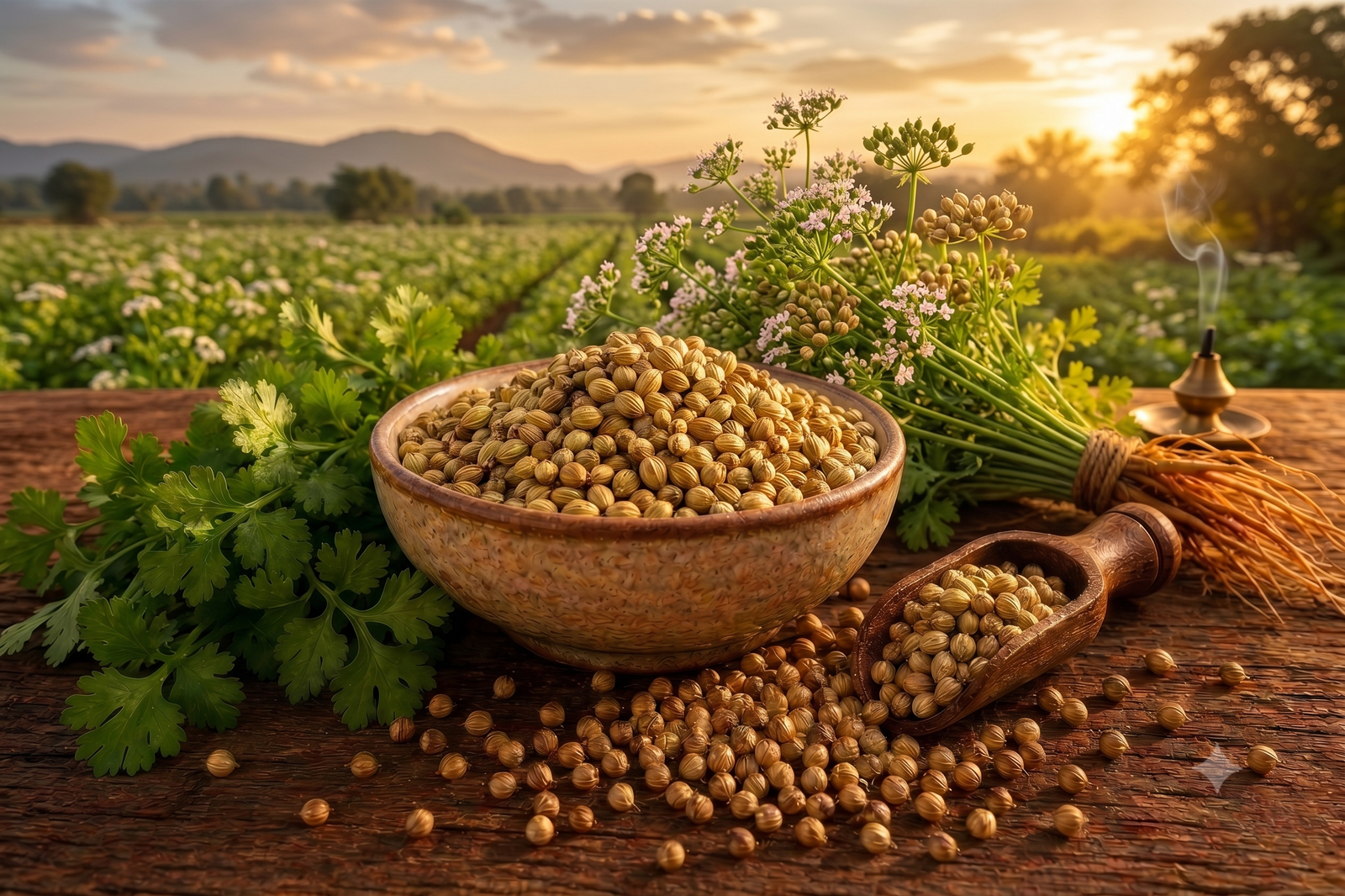
Coriander Seed The Backbone of Every Masala
ಕೊತ್ತಂಬರಿ — KottambariNot native to Karnataka — it travelled from the Mediterranean and Middle East — but coriander seed forms the mellow, aromatic bulk of nearly every South Indian masala powder. Referenced in Sanskrit texts and Ayurvedic literature as Dhanyaka, it is the quiet foundation that lets sharper spices shine.
- Known as Dhanyaka in ancient Sanskrit texts Referenced across Ayurvedic literature for thousands of years.
- Called Kothambari in Kannada The mellow, nutty backbone of Sambar, Rasam, and Masala Saaru powders.
- Travelled from the Mediterranean Adopted into South Indian tradition centuries ago, it is now indispensable to Karnataka's masala blends.
Karnataka Ingredient Archive
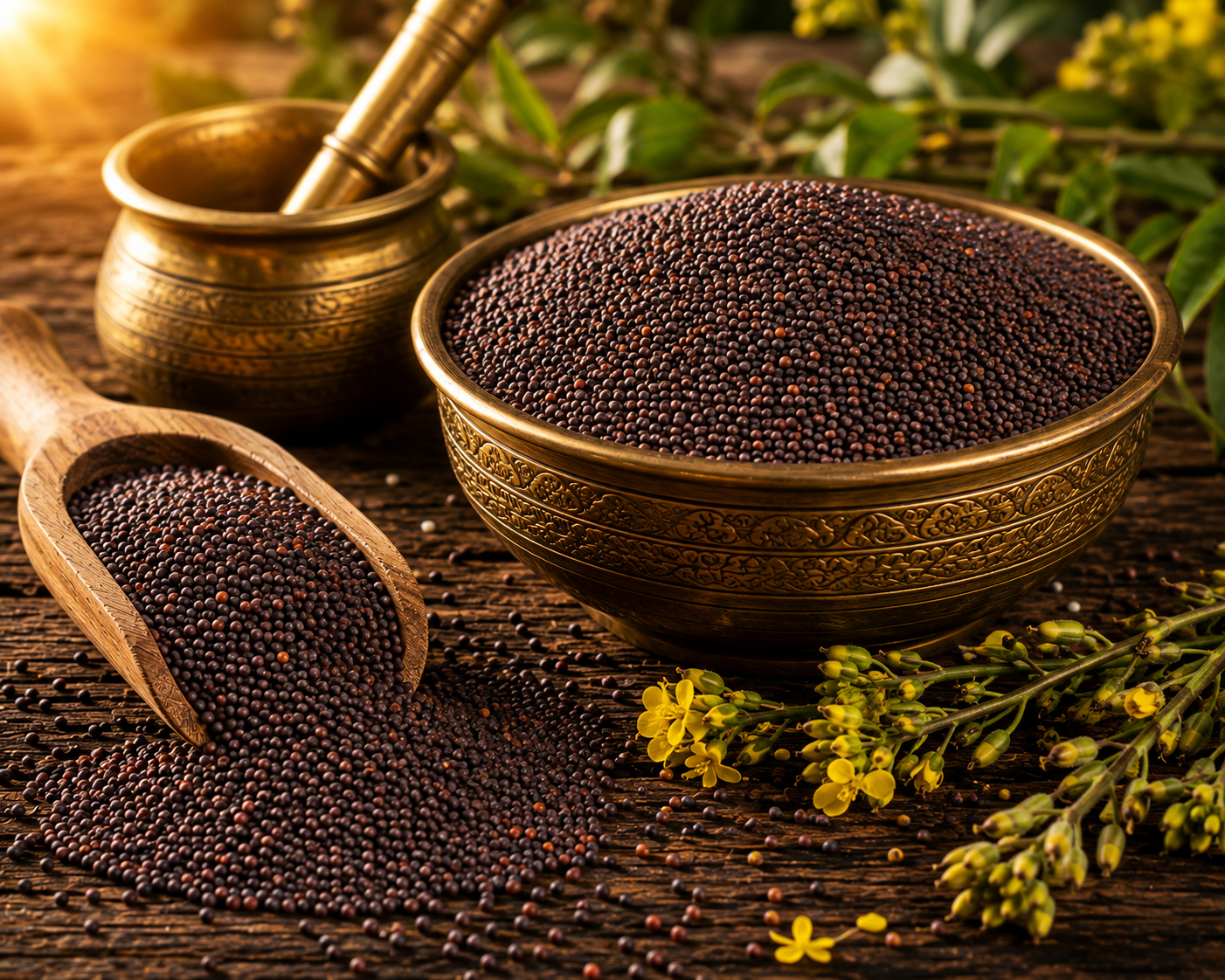
Mustard Seeds Ancient Ayurveda's Tempering Seed
ಸಾಸಿವೆ — SasiveCultivated for thousands of years, native to the Indian subcontinent, mustard seeds (Sasive in Kannada) are the first step of Oggarane — the essential Karnataka tempering tradition. Dropped into hot oil and allowed to crackle (Sasive Sidiyuvudu), they unlock a rich, nutty aroma that sets off every dish.
- The start of every Karnataka dish Sasive is the first ingredient in Oggarane (tempering) — the culinary foundation of Karnataka cooking.
- Cultivated for thousands of years Native to the Indian subcontinent and woven into Ayurvedic culinary tradition.
- Kannada proverb: Sasivebija Meaning the mustard seed — used in Kannada to express how great potential lives in the smallest things.
Karnataka Ingredient Archive
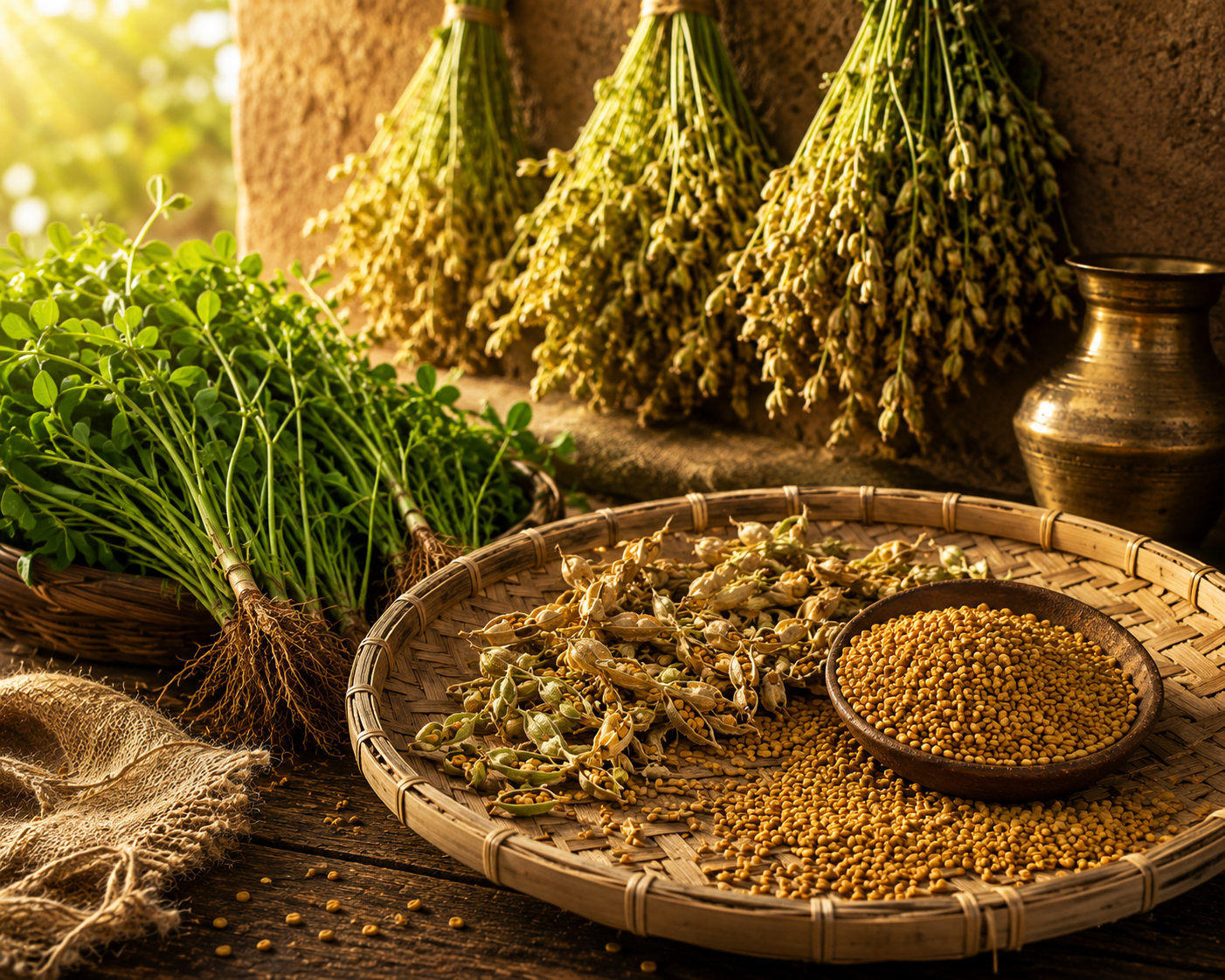
Fenugreek Seeds Ayurvedic Heritage
ಮೆಂತ್ಯ — MenthyaWith a 6,000-year cultivation history — seeds found in Tutankhamun's tomb in ancient Egypt — fenugreek has travelled far. Not native to Karnataka, but woven into early Ayurvedic texts and South Indian sambar-style cooking as Menthya, it adds its signature bittersweet note to Karnataka's most beloved dishes.
- 6,000-year cultivation history Fenugreek seeds were found in Tutankhamun's tomb, tracing origins to ancient Egypt and the Middle East.
- Key to Bisi Bele Bath Pudi Dry-roasted to add a bittersweet background note to Karnataka's most celebrated rice dish.
- Menthya Huli — a Karnataka tradition A sambar made with fenugreek seeds that has been part of Karnataka home cooking for generations.
Karnataka Ingredient Archive
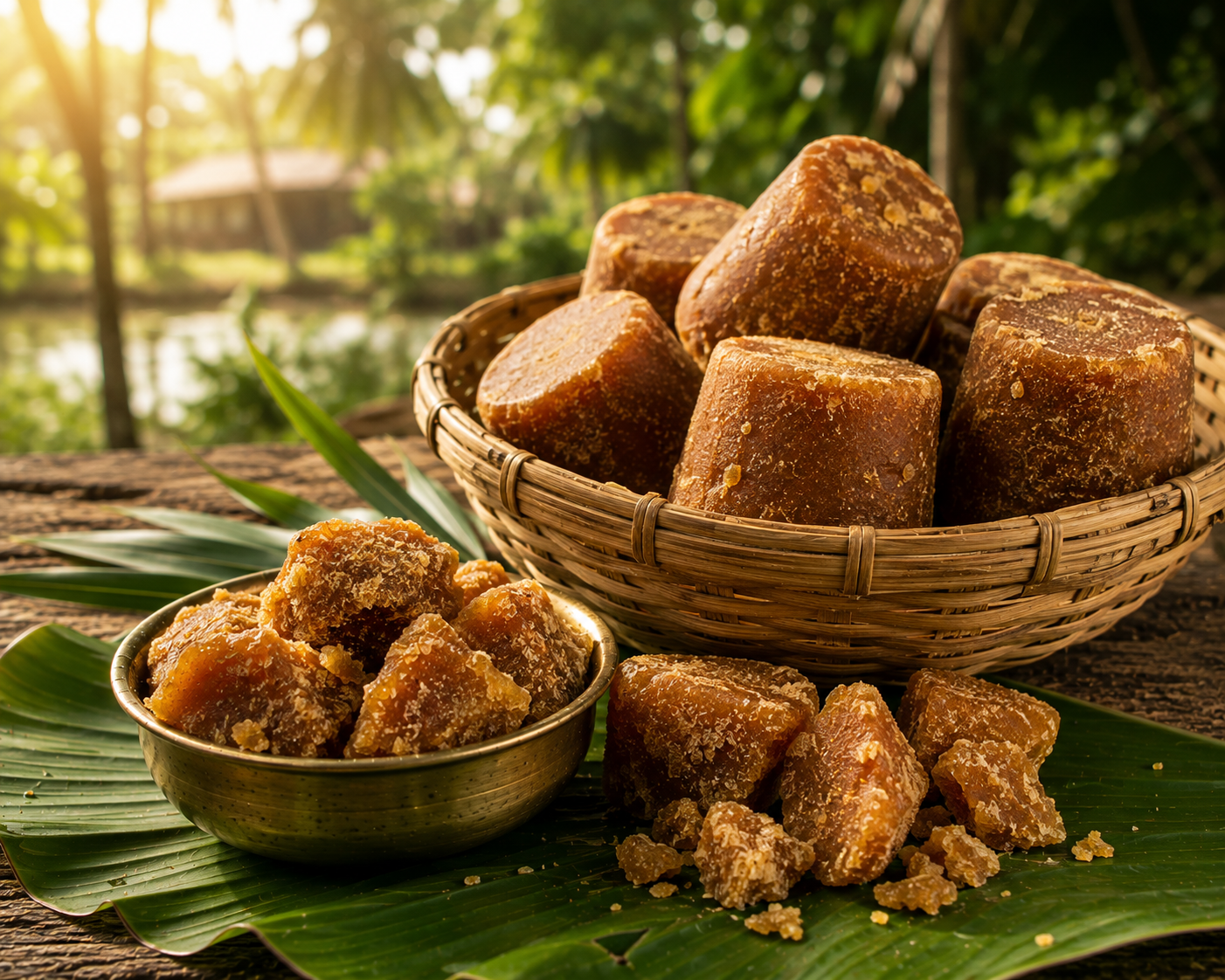
Jaggery Karnataka's Everyday Sweetener
ಬೆಲ್ಲ — BellaAlongside tamarind and ragi, jaggery (Bella) is a core ingredient defining Karnataka's kitchens — balancing the spicy, sour, and salty notes in Bisi Bele Bath, Puliyogare, Huli Saaru, and Saaru. Towns like Mandya are associated with traditional sugarcane cultivation and jaggery-production. Bella is central to Sankranti — exchanged as Yellu Bella as a symbol of goodwill.
- Central to Makara Sankranti Yellu Bella — jaggery, copra, fried gram, and peanuts — exchanged as a symbol of goodwill every Sankranti.
- Mandya — Karnataka's jaggery heartland Traditional sugarcane cultivation and jaggery units in Mandya district carry this legacy.
- Balances Karnataka's flavour trinity Spicy, sour, and sweet — Bella adds the final note that completes Karnataka's signature taste.
Karnataka Ingredient Archive
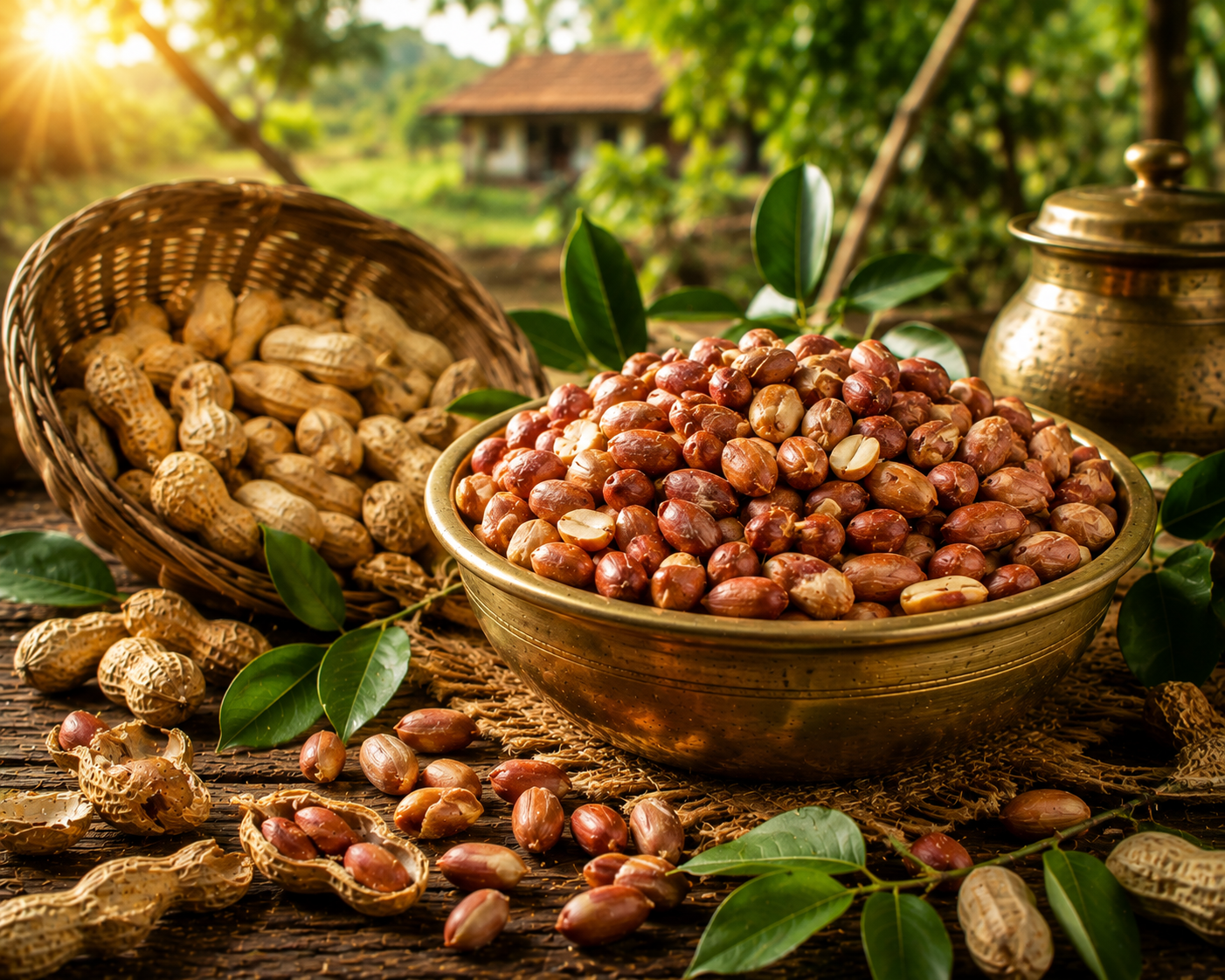
Roasted Peanuts Bengaluru's Own Harvest Festival
ಕಡಲೆಕಾಯಿ — KadalekaiAccording to folklore, farmers whose groundnut fields were threatened by a wild bull prayed for help — the bull is said to have transformed into stone. Kempe Gowda, founder of Bengaluru, built the Bull Temple (Dodda Basavana Gudi) on the spot in 1537. The Kadalekai Parishe — held annually along Bull Temple Road — traces continuously to the temple's founding.
- Kadalekai Parishe — Bengaluru's harvest tradition Farmers offer the season's first groundnut harvest along Bull Temple Road, Basavanagudi, every year.
- Bull Temple founded by Kempe Gowda in 1537 A civic tradition built around the peanut crop — unique to Bengaluru's cultural identity.
- Arrived via Portuguese traders in the 1500s Peanuts are not native to India — they originated in South America — yet Bengaluru built a distinct tradition around them.
Karnataka Ingredient Archive
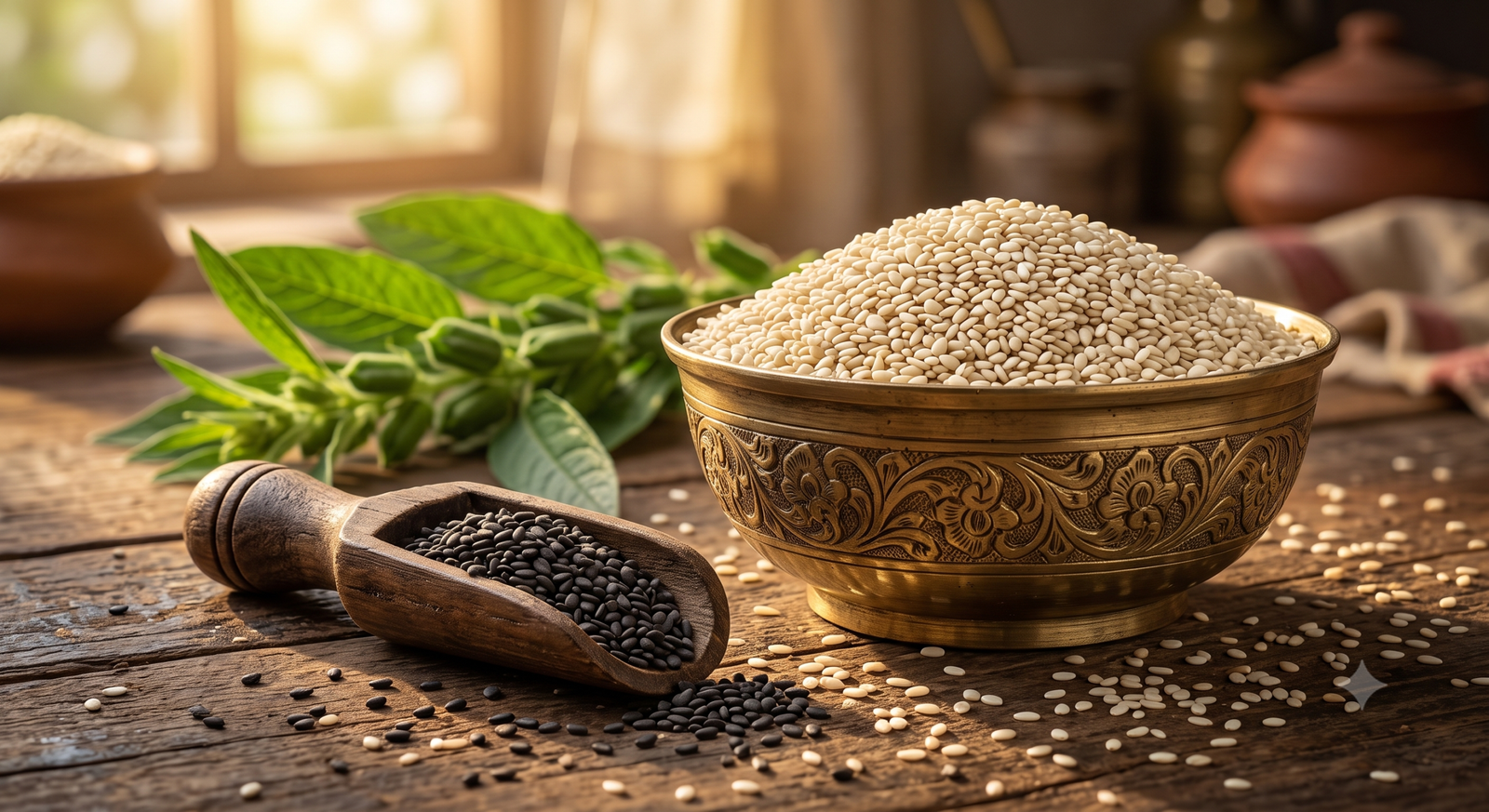
Sesame Seeds The Seed of Sankranti
ಎಳ್ಳು — ElluOne of the oldest domesticated oilseed crops, with Indus Valley evidence from ~2600 BCE at Harappa. Central to Makara Sankranti, Karnataka's winter harvest festival — families exchange plates of Ellu Bella (sesame, jaggery, peanuts, dry coconut) in a tradition called Ellu Birodhu.
- Indus Valley evidence from ~2600 BCE One of the oldest cultivated oilseeds in human history, documented at Harappa.
- Ellu Birodhu — the Sankranti ritual Exchanging Ellu Bella at Sankranti is an annual Karnataka tradition of mending relationships and renewing social harmony.
- Kannada proverb: Ellu bella thindu olle maathadi "Eat sesame and jaggery, and speak only sweet words" — the philosophical heart of Sankranti.
Karnataka Ingredient Archive
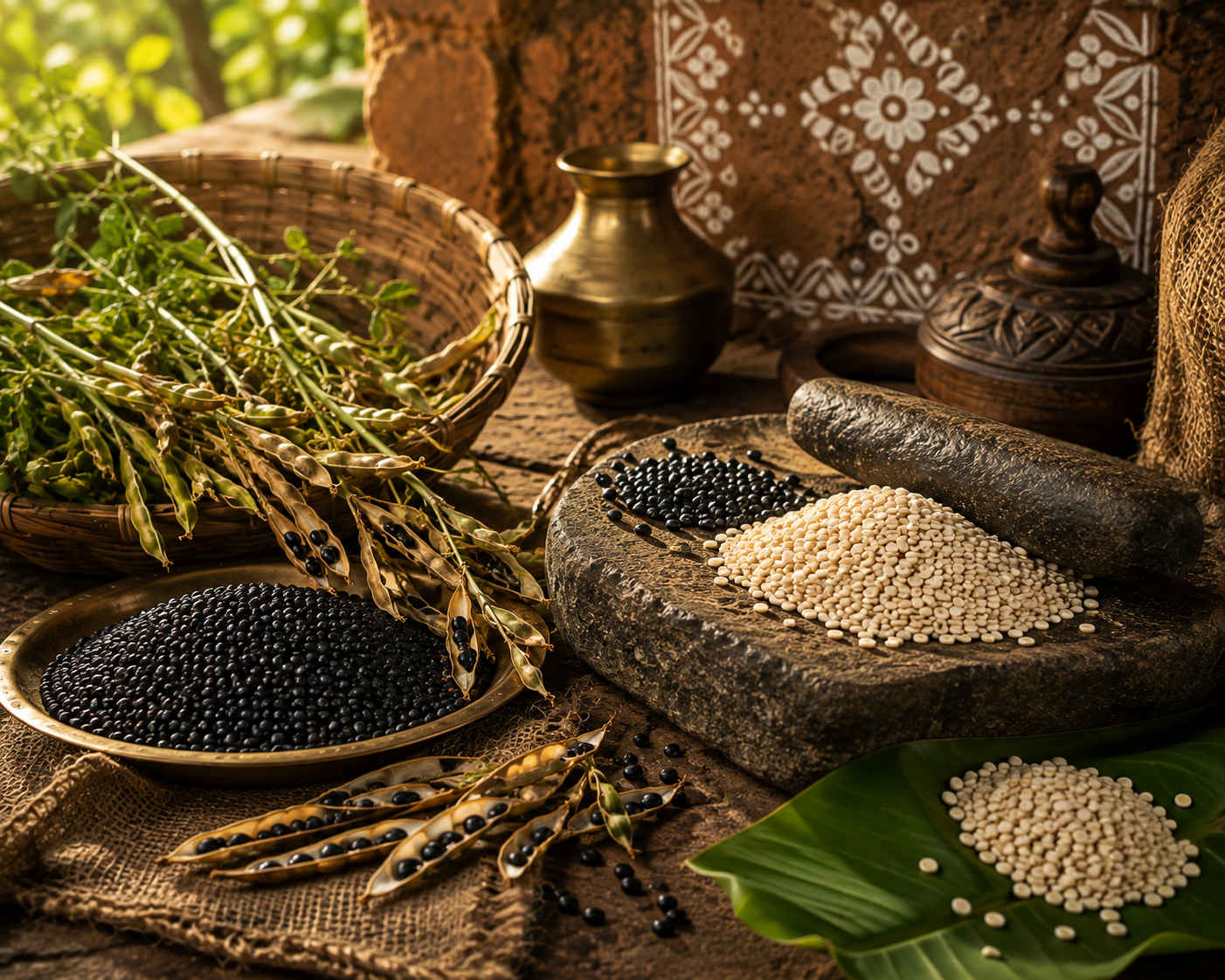
Chana Dal A Staple of Karnataka's Oggarane
ಕಡಲೆ ಬೇಳೆ — Kadale BeleNative to the Indian subcontinent, cultivated for 4,000+ years, chana dal (Kadale Bele) is one of India's earliest domesticated pulses. Along with Uddina Bele, it forms the classic duo of Karnataka's Oggarane — fried until golden and brittle, adding crunch to Puliyogare, Chitranna, and coconut chutneys.
- Cultivated for 4,000+ years in India One of the earliest domesticated pulses on the Indian subcontinent.
- Part of the classic Oggarane duo Chana Dal and Urad Dal together create the golden, crunchy base of Karnataka's tempering tradition.
- Adds texture to Karnataka's most loved dishes Essential in Puliyogare, Chitranna, and coconut chutney — the golden crunch that defines the dish.
Karnataka Ingredient Archive
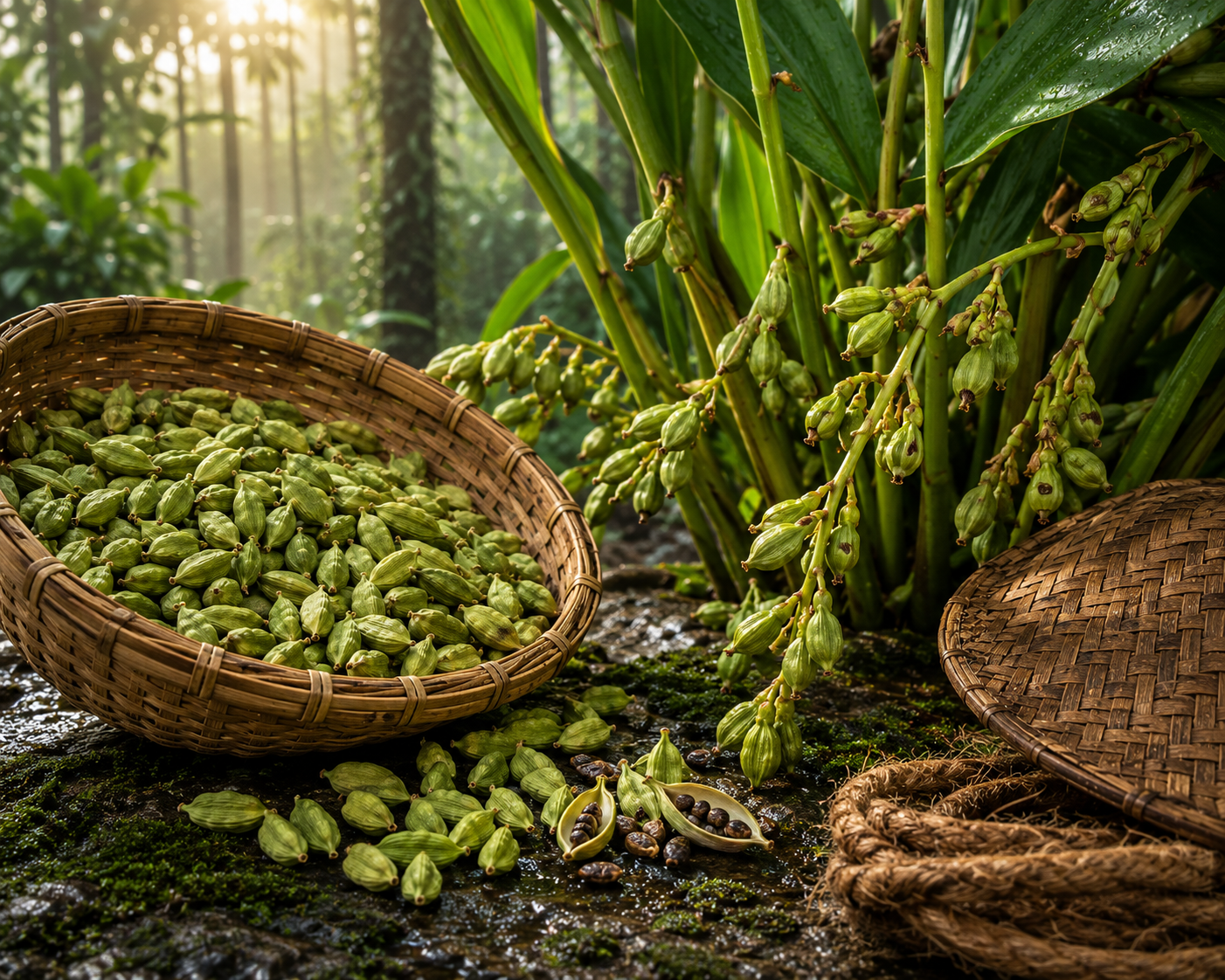
Cardamom Karnataka's Forest Spice
ಯಾಲಕ್ಕಿ — YalakkiCardamom (Yalakki) grows in the moist evergreen forests of the Western Ghats. Karnataka is a genuine major producer — roughly a third of India's cardamom cultivation — concentrated in Kodagu and Chikkamagaluru, grown alongside coffee plantations in the high-altitude forests.
- Grows in the Western Ghats The moist evergreen forests of Kodagu and Chikkamagaluru are Karnataka's cardamom heartland.
- ~1/3 of India's cardamom from Karnataka Karnataka is a genuine major producer of this premium spice, concentrated in the coffee belt.
- Intercropped with coffee in Kodagu Cardamom and coffee share the same high-altitude, high-rainfall growing conditions in Karnataka.
Karnataka Ingredient Archive
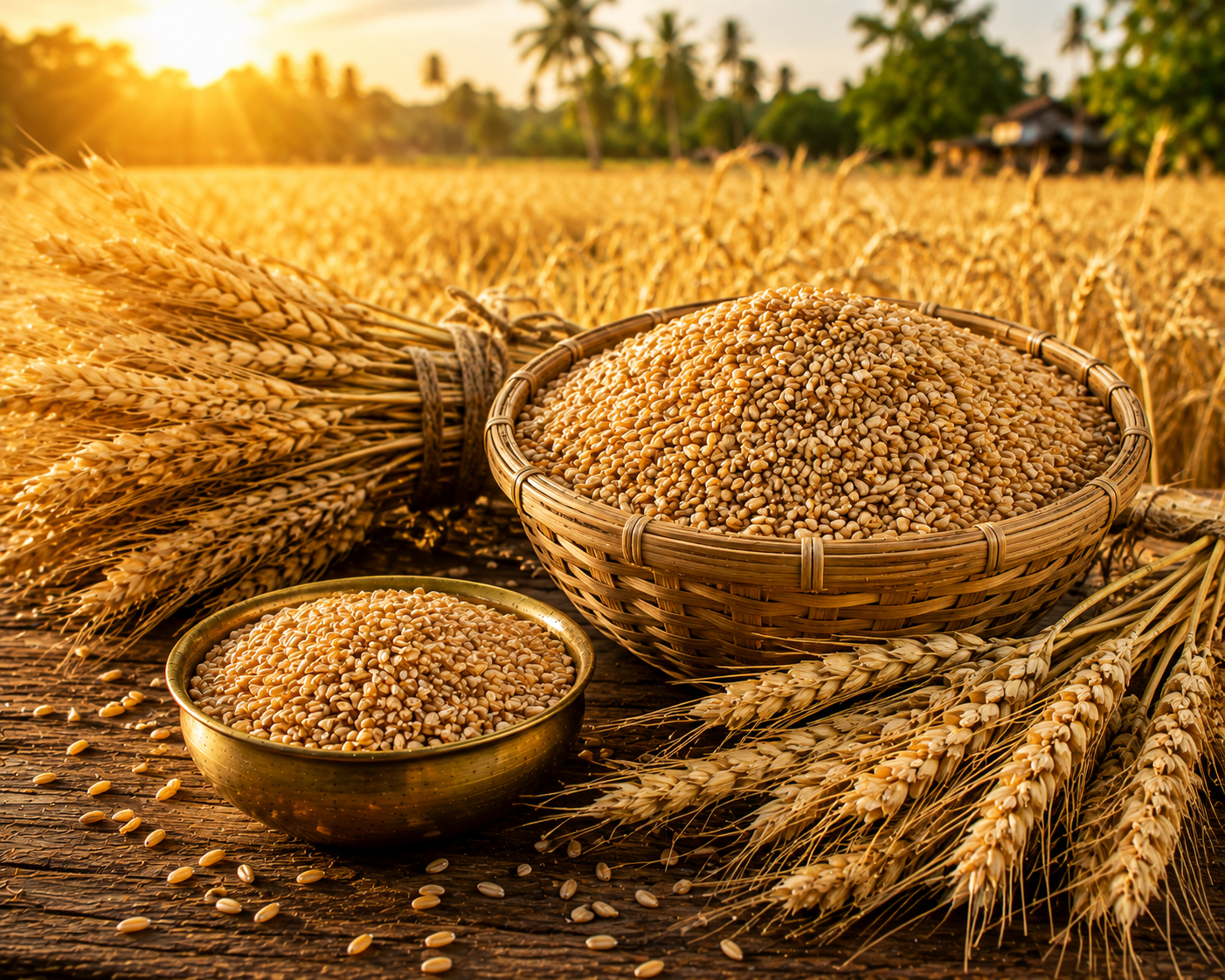
Wheat The Practical Alternative
ಗೋಧಿ — GodiNot native to South India, but wheat holds a genuine secondary place in Karnataka kitchens as a practical alternative to rice and ragi. Rolled into Godi Chappathi, cracked into Godi Thari for Upma, or fried into Puri paired with potato sagu — wheat adapts gracefully to Karnataka's culinary traditions.
- Godi Chappathi — a Karnataka kitchen staple Wheat roti adapted into everyday Karnataka cooking as a complement to rice and ragi.
- Godi Thari — cracked wheat Upma A wholesome breakfast preparation that became part of North Karnataka's morning table.
- Puri & Potato Sagu — festive favourite Wheat-based puri paired with spiced potato sagu is a beloved weekend treat across Karnataka.
Karnataka Ingredient Archive
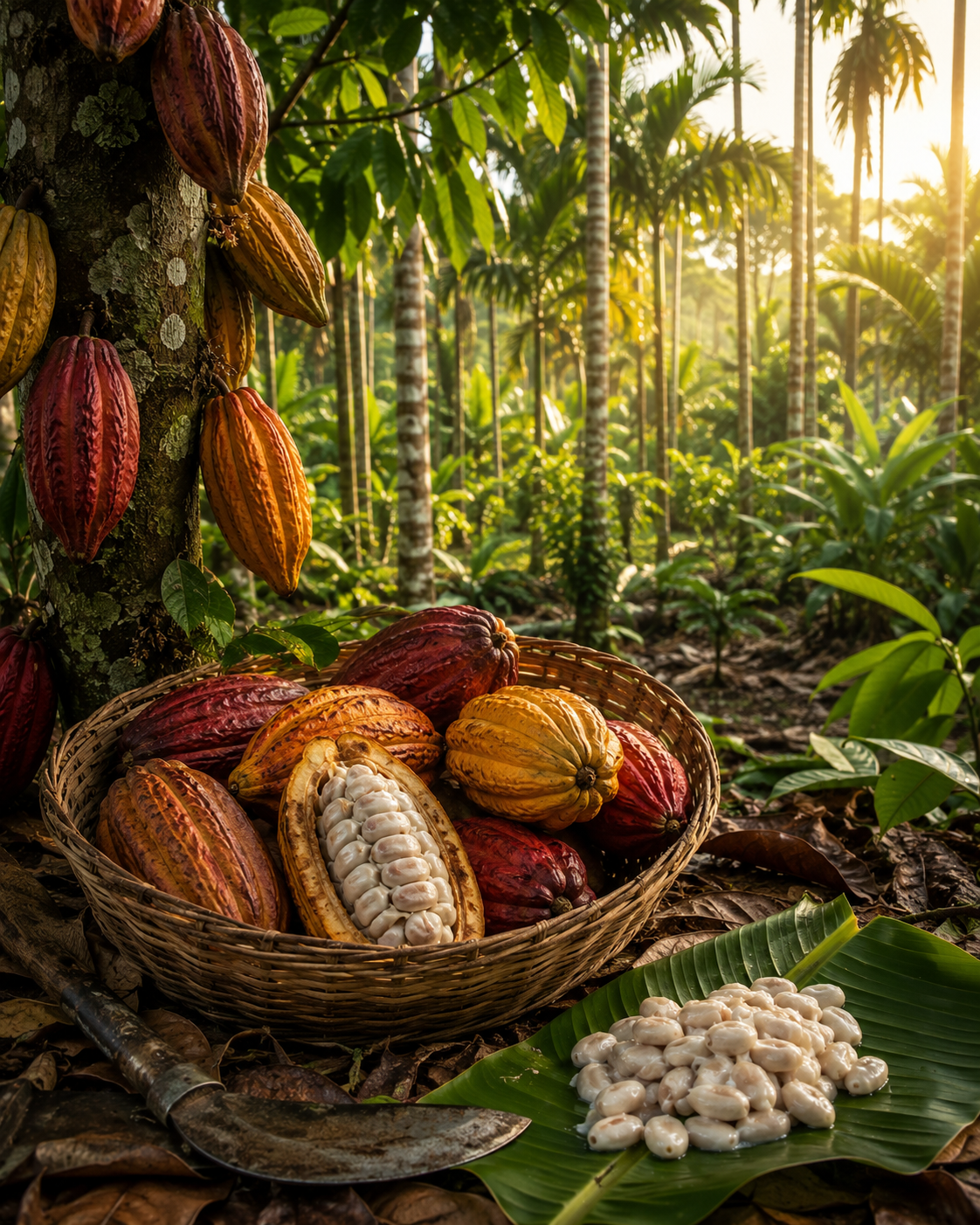
Cocoa The Modern Intercrop
ಕೋಕೋ — KokoNative to the Amazon rainforest, cocoa is a recent addition to South India's agriculture — introduced as a specialised plantation crop from the mid-20th century. Farmers adapted it to grow under palm and areca canopies in the Western Ghats from the late 1900s onward. A story of modern farming adaptation, not ancient heritage.
- Introduced from the mid-20th century Cocoa farming in South India began as a modern plantation crop, adapting tropical origins to Indian soil.
- Grown under areca & palm canopies Farmers in the Western Ghats shade-grow cocoa beneath existing plantation trees — an innovative intercropping approach.
- Modern Karnataka farming adaptation A rare example of a non-native crop finding a genuine home in Karnataka's agricultural landscape.
Karnataka Ingredient Archive
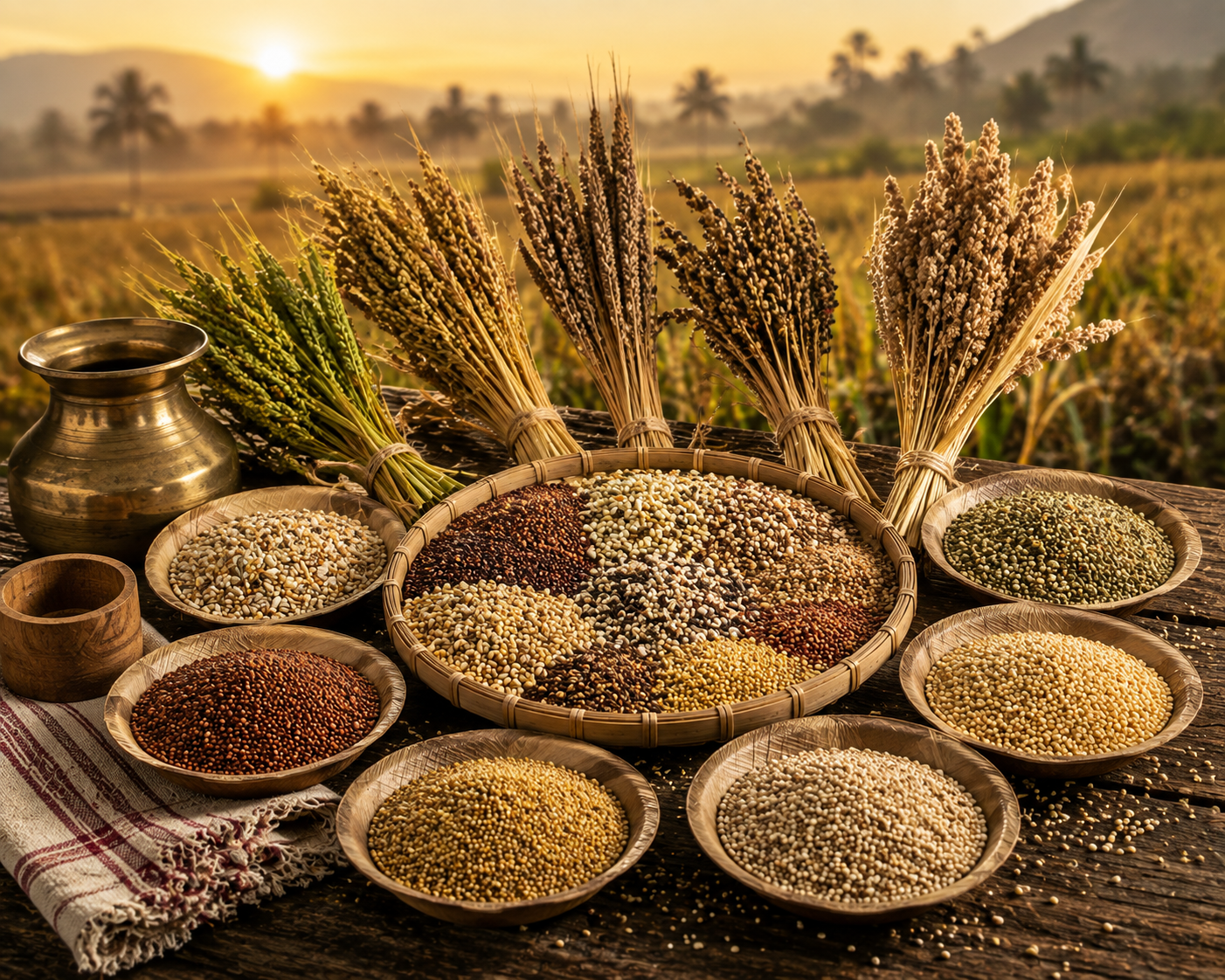
Millets Karnataka's Ancestral Grains
ಸಿರಿಧಾನ್ಯ — SiridhanyaCultivated on the Indian subcontinent for 5,000+ years, collectively known as Siridhanya (rich grains) in Kannada, millets formed the baseline nutrition of the dry Deccan plateau for millennia. Karnataka has been a pioneering hub for millet preservation and modern revival.
- Siridhanya — "rich grains" in Kannada Finger millet, jowar, foxtail, pearl, and little millet have sustained Karnataka's communities for over 5,000 years.
- Ragi Mudde — the definitive Karnataka millet dish Steamed finger millet balls are the heartland food of rural Karnataka, eaten with Huli Saaru.
- Karnataka as a millet-preservation pioneer Karnataka has led efforts to revive traditional millet varieties and reintegrate them into modern diets.
Karnataka Ingredient Archive
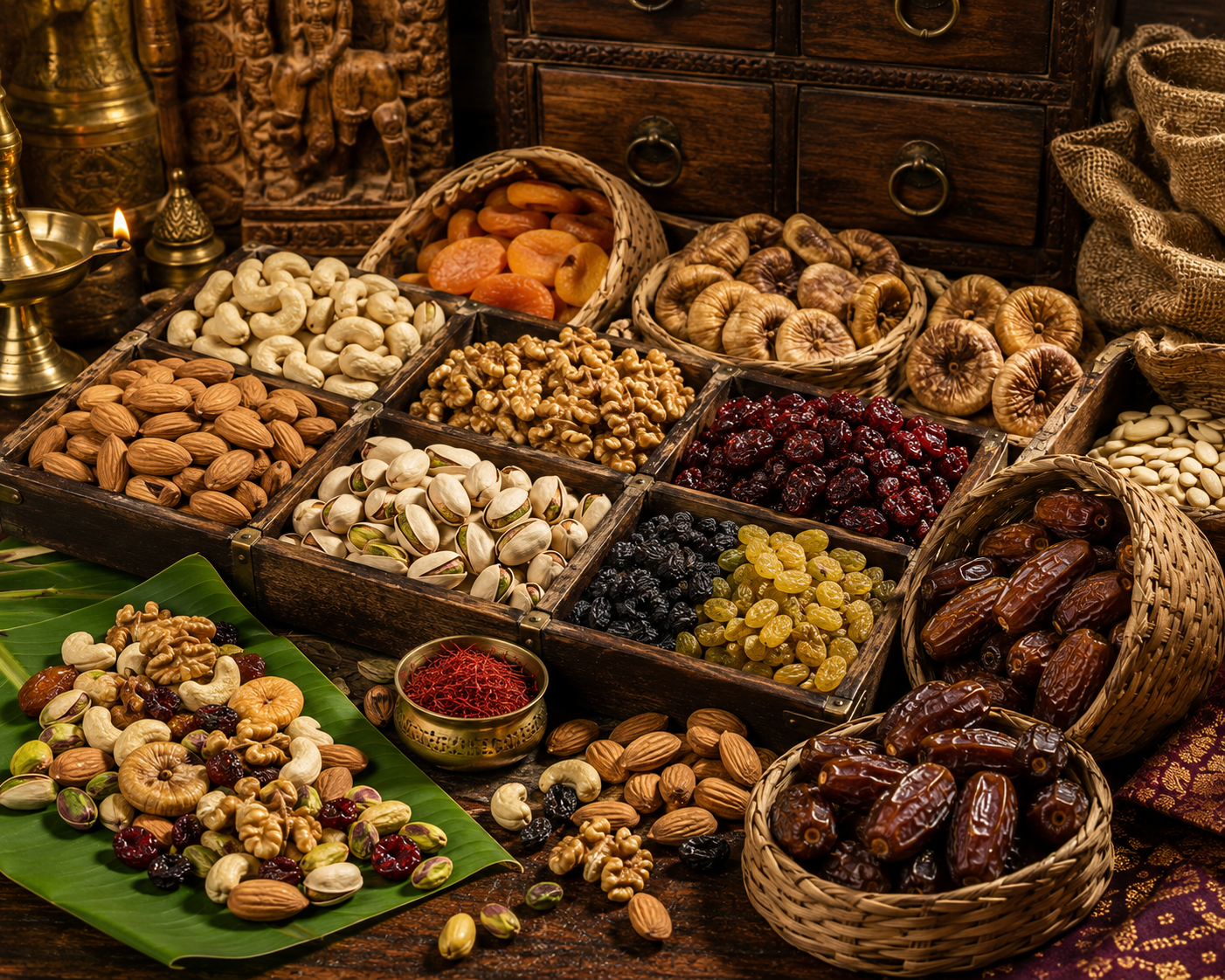
Dry Fruits & Nuts The Festive Accent
ಒಣಹಣ್ಣು — Ona-hannuAlmonds, cashews, raisins, and dates arrived in South India via coastal trade routes and royal courts, evolving into a symbol of hospitality and festive celebration. Ghee-roasted nuts are a staple of festive menus and temple offerings, and a valued addition to celebratory sweets like Antina Unde.
- Arrived via coastal trade routes Almonds, cashews, and dates found their way to Karnataka through ancient maritime trade with the Middle East.
- Central to Karnataka festive sweets Ghee-roasted nuts are a staple of temple offerings and celebratory dishes like Antina Unde.
- A symbol of hospitality and generosity Offering dry fruits has been part of Karnataka's tradition of welcoming guests for centuries.
Karnataka Ingredient Archive
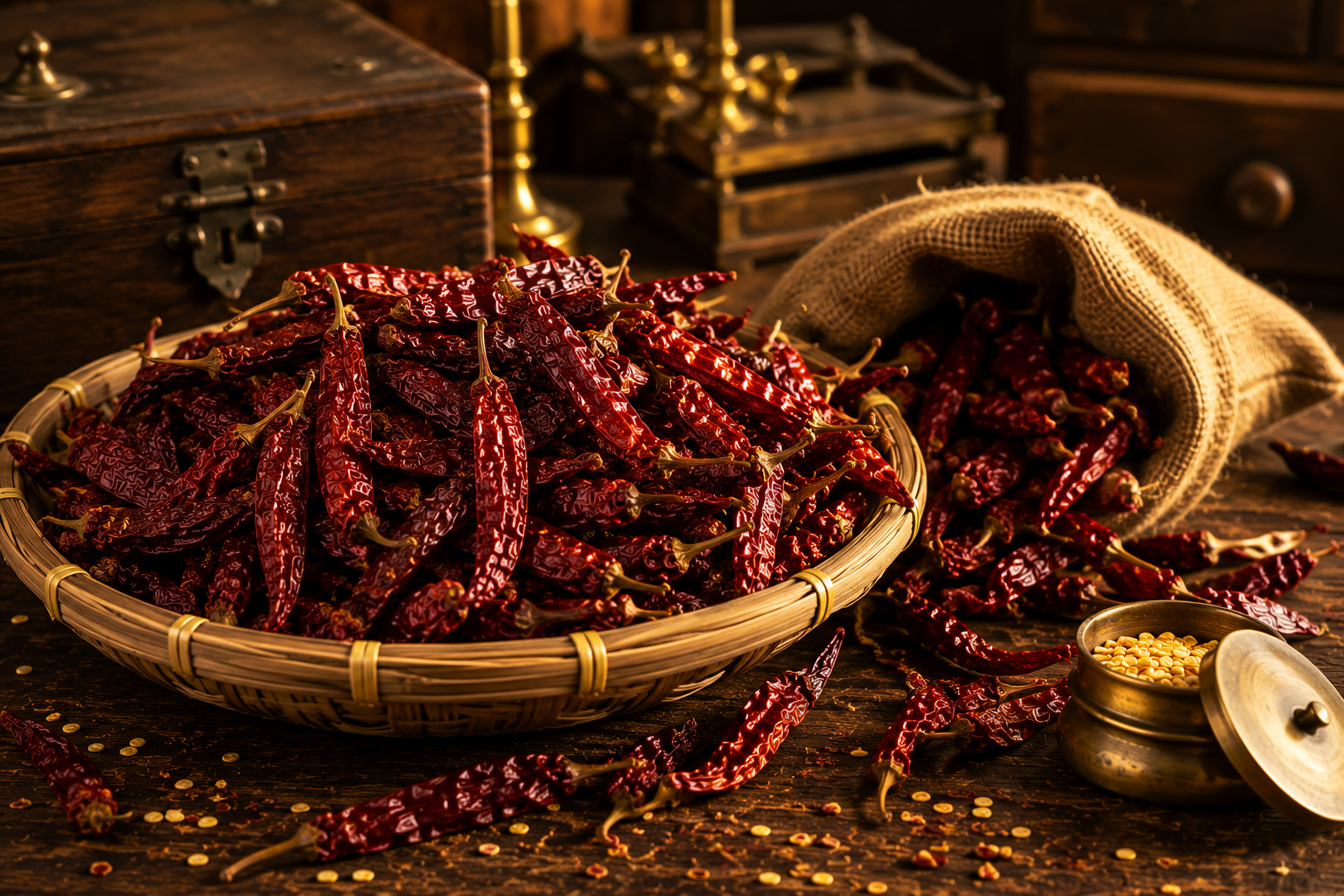
Byadagi Chilli Colour Without the Heat
ಬ್ಯಾಡಗಿ ಮೆಣಸಿನಕಾಯಿ — Byadagi Menasina KayiCultivated around Byadagi town in Haveri district for roughly 200 years, this chilli is prized worldwide for its deep red colour and low pungency — giving Karnataka masalas their signature appearance without overwhelming heat. Granted the GI tag (GI No. 129) by the Government of India in 2011.
- GI Tag No. 129 — Government of India, 2011 The Byadagi Chilli's unique colour and character earned official Geographical Indication protection.
- 200 years of cultivation in Haveri district Grown around Byadagi town and across Dharwad, Gadag, Bellary, and Chitradurga districts.
- Colour over heat — Karnataka's signature Prized worldwide for brilliant red colour with gentle warmth, it defines the visual identity of Karnataka masalas.